

Time is one of the most limited resources for parents. Between work, school schedules, errands, and family life, shopping often becomes a rushed task rather than a thoughtful one. This is where efficient shopping tips make a measurable difference. By simplifying decisions and focusing on practicality, parents can reduce time spent shopping while still maintaining personal style.
Time saving fashion is not about owning less for the sake of minimalism. It is about owning the right pieces that support daily routines. Parent lifestyle fashion increasingly centers on versatility, repeat wear, and ease of maintenance, all of which directly influence how much time shopping and getting dressed actually takes.
Why Shopping Feels So Time-Consuming for Parents
Shopping becomes inefficient when it lacks structure. Many parents shop reactively, buying items only when something wears out or an event is approaching. This often leads to rushed decisions, extra browsing, and unnecessary returns.
Several common factors contribute to time loss:
- Searching across too many brands or platforms
- Buying items that do not work with existing wardrobes
- Choosing clothing that requires special care or styling
- Making impulse purchases that later go unused
Without a clear strategy, shopping expands to fill the limited time available.

Efficient Shopping Tips That Reduce Decision Fatigue
Decision fatigue plays a major role in why shopping feels exhausting. The more choices available, the harder it becomes to select items confidently. Efficient shopping tips focus on narrowing options before shopping even begins.
Key strategies include:
- Setting clear criteria for fit, color, and fabric
- Limiting shopping to a small number of trusted brands
- Shopping with a specific purpose rather than browsing
Parents who apply these rules consistently tend to shop faster and with fewer regrets. The goal is not perfection but predictability.
How Time Saving Fashion Starts With Wardrobe Planning
Time saving fashion begins long before clicking "add to cart." It starts with understanding how often each piece will realistically be worn.
Practical wardrobe planning focuses on:
- Neutral color palettes that mix easily
- Clothing that works across multiple settings
- Pieces that require minimal styling effort
A planned wardrobe reduces the need for frequent shopping and simplifies daily outfit choices. For parent lifestyle fashion, this approach aligns style with routine rather than trends.
Why Versatile Clothing Saves More Time Than Trend Pieces
Versatility is one of the most overlooked time savers. Clothing that works for school drop-offs, casual meetings, errands, and weekends eliminates the need for multiple outfit changes.
Highly versatile pieces often share these traits:
- Simple silhouettes
- Comfortable fabrics with structure
- Designs that layer well
Parents who prioritize versatility spend less time planning outfits and less time shopping for replacements.
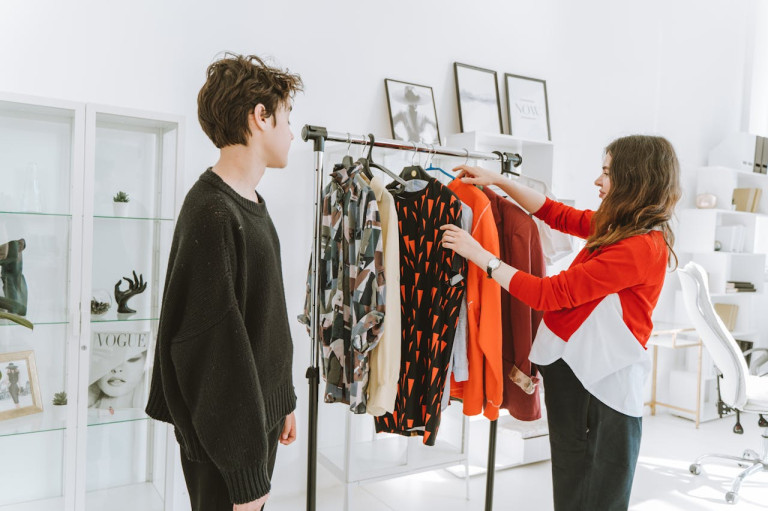
Online vs In-Store Shopping for Busy Parents
Both online and in-store shopping can save time when used intentionally. Problems arise when parents use both without a strategy.
Online shopping saves time when:
- Sizes and fits are already known
- Favorite items are reordered
- Filters and saved preferences are used
In-store shopping is faster when:
- The visit is planned with a short list
- The store layout is familiar
- Items are tried on immediately to avoid returns
Efficient shopping tips suggest choosing one primary method and refining it rather than switching constantly.
How Fabric Choices Impact Time Spent Shopping and Dressing
Fabric choice plays a surprisingly large role in time saving fashion. High-maintenance materials increase time spent washing, ironing, and replacing damaged items.
Time-efficient fabrics often include:
- Wrinkle resistant blends
- Machine washable materials
- Durable knits with stretch
For parent lifestyle fashion, ease of care is not a luxury. It directly affects daily schedules and long-term wardrobe value.
Avoiding Overbuying to Save Time Long Term
Overbuying leads to clutter, which creates new problems. A crowded wardrobe makes it harder to see what is available and easier to forget what has already been purchased.
Practical ways to prevent overbuying:
- Edit the wardrobe seasonally
- Track frequently worn items
- Avoid buying duplicates without purpose
Parents who buy fewer, better pieces spend less time managing their closets and less time shopping overall.
Planning Ahead as a Time Management Tool
Planning ahead shifts shopping from a reactive task to a controlled one. Parents who plan seasonally often avoid last-minute purchases that take longer and cost more.
Planning ahead includes:
- Identifying gaps before the season begins
- Replacing worn items early
- Keeping a short running list of needs
This method aligns shopping habits with real life routines instead of urgent deadlines.
Shopping Smarter for a Sustainable Parent Lifestyle
Efficient shopping tips support more than time management. They also encourage sustainability by reducing unnecessary purchases and extending the lifespan of clothing.
Time saving fashion benefits from:
- Quality over quantity
- Thoughtful repetition of outfits
- Long-term use rather than short-term trends
Parent lifestyle fashion thrives when practicality and intention guide decisions.
Smart Shopping Habits That Support Busy Parent Schedules
Shopping does not have to compete with family time. When approached strategically, it becomes a background task rather than a stressful one. Parents who adopt time saving fashion principles often find that less shopping leads to better wardrobes, not worse ones.
The key lies in clarity, consistency, and choosing systems that support daily life rather than disrupt it.
Frequently Asked Questions
1. What are the most effective efficient shopping tips for busy parents?
The most effective tips include setting clear shopping criteria, limiting brand choices, planning purchases in advance, and focusing on versatile items that integrate easily into an existing wardrobe.
2. How does parent lifestyle fashion differ from regular fashion trends?
Parent lifestyle fashion prioritizes comfort, durability, versatility, and ease of care. It is designed to support daily routines rather than seasonal trends or statement dressing.
3. Why is time saving fashion important beyond convenience?
Time saving fashion reduces decision fatigue, lowers shopping frequency, and simplifies daily routines. It also minimizes wardrobe clutter and improves long-term cost efficiency.
4. Can efficient shopping habits actually reduce stress for parents?
Yes. Structured shopping habits reduce last-minute purchases, prevent overbuying, and make daily outfit decisions easier, which collectively lowers stress and saves time.

© Copyright Fashion Times 2026. All rights reserved.


