
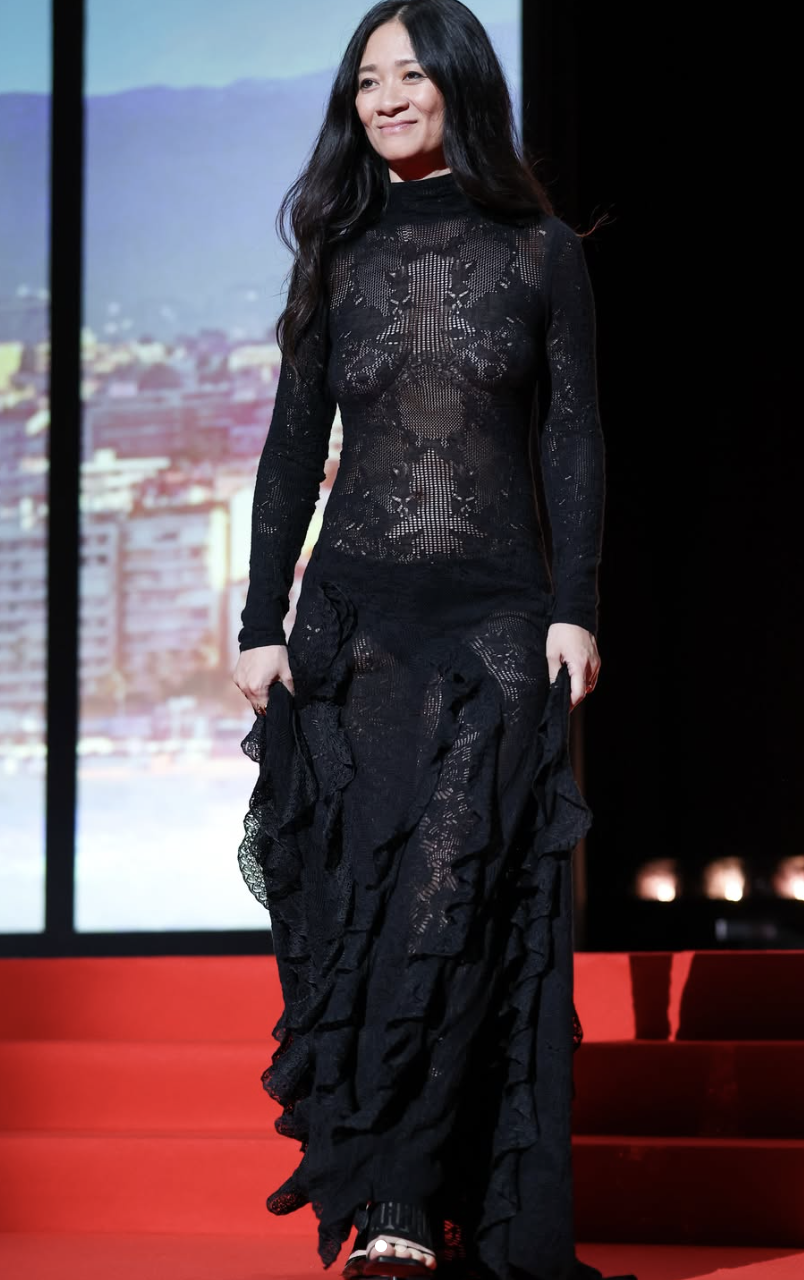
Every May, the French Riviera transforms into the world's most glamorous outdoor runway. The 79th Cannes Film Festival, running from May 12 to May 24, 2026, has already delivered the expected parade of sequins, couture gowns, and carefully curated celebrity moments. Yet among the dazzling jury members, A-list actors, and fashion royalty lining the Palais des Festivals steps, one name keeps surfacing in best-dressed roundups, and she is not an actress.
Chloé Zhao, the Oscar-winning director of "Nomadland" and "Hamnet," is turning heads on the Croisette, and fashion editors are taking note. Her looks are intentional, composed, and quietly powerful, truly a reflection of the same sensibility that defines her filmmaking. Vogue has already flagged her as one of the best-dressed directors at the 2026 Cannes Film Festival, and the wider Cannes Film Festival fashion conversation is increasingly catching up.
Who Is Chloé Zhao, and Why Does Her Style Matter?
Zhao is a Chinese-American filmmaker who rose to international prominence with "Nomadland" (2020), a film she wrote, directed, produced, and edited. The film won the Golden Lion at the Venice Film Festival and the People's Choice Award at TIFF, before earning her the Academy Award for Best Director, making her the first woman of color and only the second woman ever to win in that category. Her most recent film, "Hamnet," earned her additional Oscar nominations for Best Director and Best Adapted Screenplay at the 98th Academy Awards in 2026, and took home Best Motion Picture (Drama) at the 83rd Golden Globe Awards.
Zhao's Cannes 2026 Looks: A Masterclass in Intentional Dressing
The Opening Ceremony: Gabriela Hearst
For the opening ceremony on May 12, Zhao wore a look by Gabriela Hearst, which is a brand whose identity is rooted in sustainability, craftsmanship, and quiet luxury. The choice was fitting. Hearst's aesthetic tends toward the architectural and the considered, with clean lines that reward close attention rather than demanding it from a distance. On opening night, as fellow jury member Demi Moore arrived in custom Jacquemus and Jane Fonda dazzled in black-sequined Gucci, Zhao offered a counterpoint: refined, purposeful, and distinctly her own.
The Black Lace Gown: Gothic Elegance with Bohemian Ease
One of Zhao's most discussed looks at Cannes 2026 is her long black lace-and-mesh gown, cut to a high neckline with intricate ruffling. The transparency of the fabric was used with architectural intent, not for provocation, but for texture and depth. Paired with loose, natural waves, the overall effect was Gothic elegance grounded in bohemian ease. Fashion writers noted that the look aligned well with the opening film, Pierre Salvadori's "La Vénus Électrique," in its moody, romantic sensibility.
The Mustard Hooded Dress: Color as a Quiet Statement
At the screening for "Fatherland," Zhao arrived in a hooded mustard dress that drew immediate attention. Rich in color and unconventional in silhouette, the look was a deliberate departure from the neutral tones and black-tie formality that dominate the Cannes red carpet. It was bold without being theatrical; a distinction that is harder to achieve than it appears.
The Red Maxi Dress and Bottega Veneta: Scene-Stealing Without Trying
Perhaps the most talked-about individual look was Zhao's red maxi dress, paired with a bag by Bottega Veneta. Described by multiple fashion outlets as "scene-stealing," the look demonstrated Zhao's willingness to engage with color and drama on her own terms. It was not a look designed for maximum camera exposure. It was the kind of outfit that rewards the person wearing it first, and the audience second.
How Zhao's Style Fits (and Quietly Challenges) the Cannes Dress Code
The Cannes Film Festival dress code is no casual suggestion. For official screenings, the requirements are specific: men must wear a tuxedo or dark formal suit, while women are expected to arrive in an evening gown, cocktail dress, or elegant ensemble. For 2026, the festival reinforced its guidelines with explicit bans on nudity and oversized garments; rules that drew frustration from some stylists and celebrities who had planned looks around more dramatic silhouettes.
Why Directors Rarely Win the Fashion Conversation at Cannes
For all its cultural prestige, the Cannes Film Festival fashion conversation has historically centered on actors, models, and socialites. Directors (even Oscar winners) tend to occupy the margins of red carpet coverage. The machinery of celebrity fashion, with its brand partnerships, PR strategies, and stylist networks, is largely built around the faces that sell films, not the people who make them.
Zhao is different. Her cultural profile, built on a string of critically acclaimed and commercially significant films, has elevated her to a level of recognition unusual for a director. She is a recognizable face in a world where most filmmakers are known primarily by their credits. And because she has always dressed with intention rather than formula, her looks are genuinely interesting to dissect.
The Gabriela Hearst Connection: Fashion Values That Align with Zhao's Filmmaking
It is worth examining Zhao's choice to wear Gabriela Hearst for the opening ceremony in greater detail. Hearst is a luxury brand with a genuine commitment to sustainable production, craft, and considered design. The brand does not chase trend cycles. It builds garments with intention, using materials sourced responsibly and construction methods that prioritize longevity over disposability.
For a filmmaker whose work consistently engages with themes of impermanence, resilience, and the relationship between humans and their environment, Hearst's values translate into something coherent. Zhao's fashion choices, at their best, feel like extensions of her creative worldview rather than departures from it.
Chloé Zhao and the Expanding Definition of Cannes Red Carpet Style
The Cannes Film Festival red carpet has always been a stage, but the cast of characters who command that stage is shifting. For decades, the narrative has been shaped by actors in borrowed couture and models in sponsored gowns. Zhao's prominence in this year's best-dressed coverage suggests an appetite for a different kind of style story.
She is not dressed by a team optimizing for maximum brand exposure. She does not appear to be performing glamour for its own sake. She is a filmmaker who attends a film festival and happens to dress in a way that fashion editors find worth discussing at length. That distinction matters.
Why Chloé Zhao Is the Cannes Style Story Worth Following in 2026
With the 79th Cannes Film Festival still ongoing through May 24, more Zhao looks are likely to surface, and more fashion editors are likely to weigh in. But even at this stage, a pattern is clear. Zhao is not competing on the same terms as the actresses and models who dominate the Cannes Film Festival fashion headlines. She is playing a different game entirely and winning it.
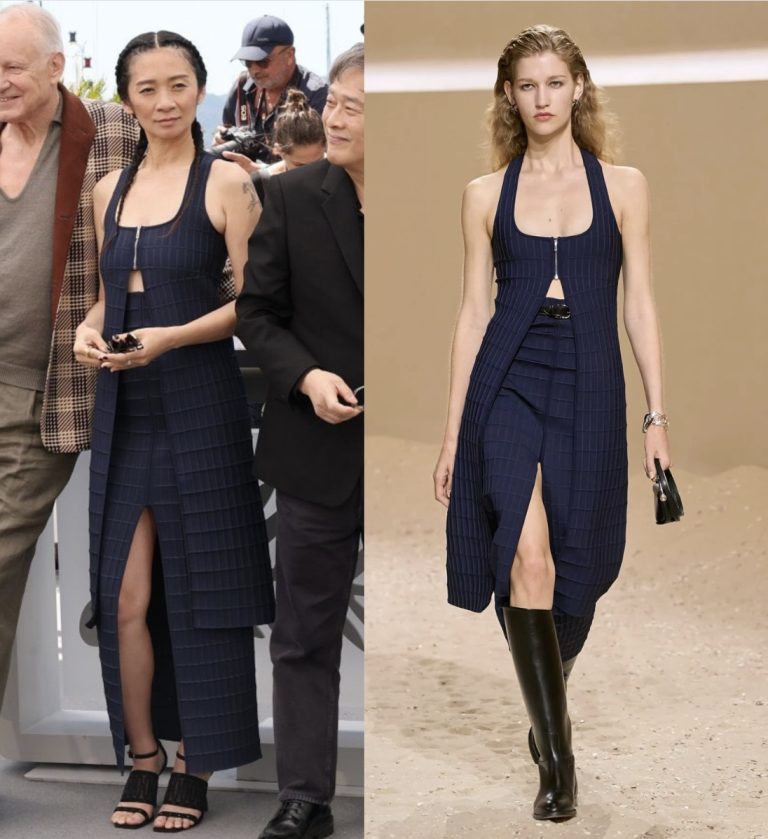
Her looks at Cannes 2026 have been consistent in their quality and varied in their approach: from the sustainable luxury of Gabriela Hearst at opening night, to the architectural drama of black lace, to the confident warmth of a mustard hood, to the rule-dissolving energy of navy and black. Each look reflects an intelligence about dressing that goes beyond aesthetics.
Zhao's red carpet style at Cannes 2026 is a reminder that the most interesting fashion moments do not always come from the most expected sources. Sometimes the best-dressed person in the room is the one who made the film.

© Copyright Fashion Times 2026. All rights reserved.


