
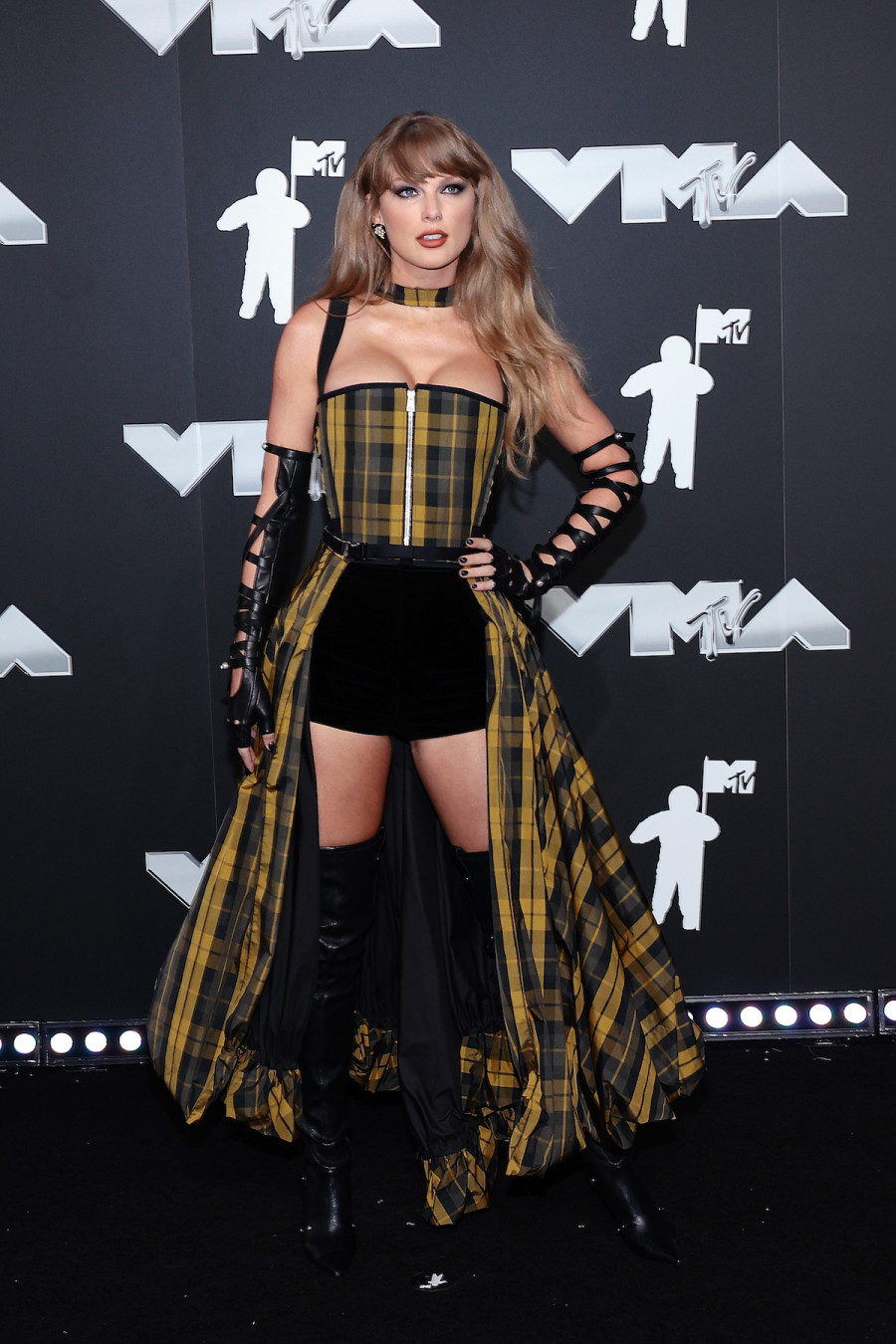
Fashion trends do not always start on runways. In many cases, they take shape through repetition, visibility, and emotional connection. Taylor Swift has consistently influenced how people dress by aligning her wardrobe with clearly defined creative eras. This approach has made Taylor Swift fashion a long-standing reference point in global style conversations and a powerful driver of celebrity street style.
Rather than adopting a fixed aesthetic, Swift uses clothing as an extension of storytelling. Each era introduces a distinct visual language that audiences recognize, remember, and often replicate. Below are eight defining looks, categorized by era, that moved from personal expression into mainstream fashion.
1. Red Era (2012): Vintage Dresses and Red Lipstick
The Red era marked a turning point where Swift's style became both intentional and symbolic. Vintage-inspired dresses and a bold red lip created a visual shorthand for romance, heartbreak, and nostalgia. This era reframed classic femininity as expressive and confident rather than conservative.
These looks stood out because they felt consistent across appearances, reinforcing the idea that repetition builds identity. Designers and retailers responded by reintroducing retro silhouettes to younger consumers, who embraced them as timeless rather than old-fashioned.
Defining elements
- Fit-and-flare dresses inspired by mid-century fashion
- Matte red lipstick as a signature beauty choice
- Ballet flats and classic pumps
2. 1989 Era (2014): New York Street Style Staples
Swift's move to New York City in 2014 coincided with her full transition into pop stardom. Her everyday outfits were photographed constantly, transforming sidewalks and coffee runs into fashion moments. This era made her a dominant reference point in celebrity street style coverage.
The appeal lay in balance. These looks felt styled but not overproduced, encouraging audiences to view everyday dressing as an extension of personal branding. The result was a wave of polished casualwear that felt aspirational yet achievable.
Defining elements
- Skater skirts paired with cropped sweaters
- Coordinated separates worn during the day
- Oxford shoes and ankle boots

3. 1989 Era (2015): Coordinated Sets
As the 1989 era continued, Swift's style became more refined and streamlined. Coordinated sets offered visual cohesion while remaining practical for daytime and events. The simplicity of these outfits made them easy to replicate across different body types and budgets.
This phase influenced how people approached outfit planning. Matching sets reduced decision fatigue while still appearing deliberate, which contributed to their widespread adoption across fast fashion and designer collections.
Defining elements
- Matching crop tops and skirts
- Monochrome or pastel color palettes
- Minimal accessories
4. Reputation Era (2018): Dark Glam and Statement Dressing
The Reputation era introduced a sharper, more confrontational aesthetic. Swift moved away from softness toward darker colors and bolder silhouettes, signaling a shift in narrative control. Clothing became a visual assertion of confidence and autonomy.
This era expanded the boundaries of Taylor Swift fashion, influencing nightlife wear and stage-inspired street looks. It also normalized darker palettes for mainstream audiences who previously associated her style with lightness and romance.
Defining elements
- Black bodysuits and sleek silhouettes
- High boots and bold makeup
- Metallic textures and sharp tailoring
5. folklore Era (2020): Cardigans and Soft Layers
Released during a period of global uncertainty, the folklore era resonated deeply with audiences seeking comfort and meaning. Swift's wardrobe reflected intimacy, restraint, and emotional softness, aligning closely with shifts in lifestyle and consumption.
The cardigan became more than an item of clothing. It symbolized warmth, introspection, and slower living, helping redefine what aspirational fashion looked like during this time.
Defining elements
- Oversized knit cardigans
- Neutral-toned dresses and blouses
- Natural hair and minimal makeup
6. evermore Era (2020): Romantic Cottagecore
Building on folklore, the evermore era leaned further into romantic nostalgia. Flowing dresses and textured fabrics reinforced themes of storytelling and escape. This aesthetic aligned with the rise of cottagecore, which emphasized simplicity and emotional grounding.
Swift's adoption of this style helped move cottagecore beyond niche online spaces into mainstream fashion, influencing seasonal collections and everyday styling choices.
Defining elements
- Flowing floral midi dresses
- Earth-toned fabrics and textures
- Layered outerwear
7. Midnights Era (2022): Modern Tailoring
With Midnights, Swift returned to a more polished image while maintaining restraint. Tailored pieces were styled casually, signaling maturity without formality. This era reflected confidence built on clarity rather than excess.
The influence was subtle but lasting. Blazers and tailored sets became everyday essentials, reinforcing the idea that structure and comfort can coexist in modern wardrobes.
Defining elements
- Structured blazers worn casually
- Tailored sets with relaxed fits
- Neutral palettes with statement footwear
8. Eras Tour Era (2023–2024): Performance Fashion and Quiet Luxury
The Eras Tour showcased two contrasting fashion narratives. Onstage, Swift embraced theatrical sparkle and bold silhouettes that celebrated spectacle. Offstage, her style shifted toward understated minimalism, reflecting the growing quiet luxury movement.
This duality highlighted versatility as a form of style authority. It demonstrated that maximalism and minimalism can coexist within a single fashion identity.
Defining elements
- Sequined bodysuits for performances
- Neutral, minimalist off-duty outfits
- Focus on fit and fabric quality
Why Taylor Swift Fashion Eras Continue to Shape Celebrity Street Style
Taylor Swift's fashion influence comes from cohesion rather than trend chasing. Each era presents a complete visual system that audiences can recognize and interpret. By aligning clothing with narrative, Taylor Swift fashion continues to shape celebrity street style and everyday dressing on a global scale.
Frequently Asked Questions
1. Which Taylor Swift era had the biggest impact on fashion?
The 1989 era had the most visible impact due to constant street style coverage and highly wearable outfits.
2. Why are Taylor Swift's fashion eras so influential?
They are consistent, narrative-driven, and emotionally connected to her music and public image.
3. How does Taylor Swift fashion differ from other celebrity styles?
Her style evolves through clearly defined eras rather than seasonal trend adoption.
4. Does Taylor Swift fashion influence everyday consumers?
Yes. Her looks often translate easily into practical outfits that resonate across age groups and cultures.

© Copyright Fashion Times 2026. All rights reserved.


