

The closing moments of "The Devil Wears Prada 2" press tour placed renewed attention on wardrobe storytelling, as Anne Hathaway returned to a defining piece from her character's cinematic past. The moment was not framed as nostalgia alone but as a deliberate intersection of celebrity style and long-view costume continuity, where film history and modern fashion language overlap in real time.
The coat in question, a green vintage piece with leopard-trim detailing, originally appeared in the 2006 film and re-emerged during Hathaway's final promotional appearance tied to the sequel rollout. According to fashion coverage, the garment was reacquired through auction and styled as a symbolic full-circle gesture, closing the promotional arc with intentional reference to the character's early transformation.
The Return of An Iconic Wardrobe Signal
The coat's reappearance is not positioned as a simple repeat outfit. Instead, it operates as a visual callback to Andy Sachs' original evolution from understated assistant to fashion-insider presence. In the original film universe, clothing functioned as narrative acceleration, marking status shifts through highly curated styling decisions.
By bringing back the same silhouette and palette, the styling reinforces how costume archives can extend beyond production into ongoing cultural memory. It also demonstrates how legacy film wardrobes increasingly circulate through resale markets and private collections, where pieces re-enter public view through celebrity appearances rather than film scenes alone.
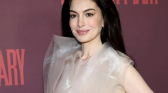
Celebrity Style as Narrative Continuity
Modern celebrity style often blurs the line between promotional dressing and character storytelling, especially during global press tours. Hathaway's styling for the sequel period has leaned heavily into this approach, with repeated references to earlier film moments integrated into contemporary luxury looks.
Fashion observers have noted that this strategy strengthens audience recognition without requiring explicit explanation. Instead of referencing dialogue or plot points, visual callbacks do the interpretive work. In this case, the coat becomes shorthand for transformation, ambition, and fashion literacy within the franchise universe.
This approach reflects a broader shift in celebrity dressing: archival pieces are no longer reserved for retrospectives or museum contexts. They are actively reintroduced into circulation to generate narrative continuity across decades.
Spring Trends 2026 and the Revival of Structured Nostalgia
The reappearance of the coat also aligns with emerging spring trends 2026, particularly the renewed emphasis on structured outerwear and heritage-inspired silhouettes. Across recent fashion cycles, designers and stylists have been revisiting earlier decades through refined tailoring, controlled volume, and statement coats that anchor otherwise minimal outfits.
Key directions visible in current styling language include:
- Structured coats with defined shoulders and elongated proportions
- Vintage-inspired prints reinterpreted in controlled, modern palettes
- A shift toward "story garments" that carry visual history rather than purely seasonal appeal
- Neutral-to-deep color contrasts used to elevate simple silhouettes
The coat's green base paired with animal-print trimming fits directly into this movement, where contrast detailing replaces overt embellishment. Instead of competing textures, the design relies on recognizable visual memory.

Fashion Storytelling Inside the Sequel Era
Coverage of the promotional rollout for "The Devil Wears Prada" sequel materials highlights a broader strategy: wardrobe choices are being used as narrative extensions of the original film's cultural footprint. Recent press features note that costume callbacks have included color references and archival reinterpretations, reinforcing continuity across both films.
Within this framework, Hathaway's coat is not an isolated styling decision but part of a coordinated visual language that ties press appearances to fictional history. It reflects how modern film marketing increasingly relies on fashion literacy as a storytelling tool.
Why the Moment Resonated Beyond Fashion Circles
The coat's reappearance gained attention because it sits at the intersection of nostalgia, archival fashion circulation, and contemporary styling trends. It demonstrates how a single garment can operate simultaneously as:
- A character artifact from early 2000s cinema
- A celebrity styling statement within present-day promotional cycles
- A reference point for current spring trends 2026 outerwear direction
Rather than functioning as a throwback, it acts as an active participant in current fashion dialogue, reinforcing how celebrity-driven styling decisions can influence seasonal aesthetic interpretation.
Fashion Memory, Revisited Through Modern Styling
What makes the moment notable is not only the garment itself but the context in which it returns. In a fashion landscape increasingly shaped by archival revival and cross-era styling, the coat illustrates how visual continuity is becoming a dominant creative strategy.
The renewed visibility of the piece underscores a larger industry shift: clothing is no longer confined to its original moment of use. Instead, it circulates through celebrity styling, editorial framing, and audience memory, gaining layered meaning with each reappearance.
In this instance, the final chapter of Hathaway's promotional journey becomes less about ending and more about reactivation, where a familiar coat reconnects past cinematic identity with present-day fashion direction and evolving celebrity style narratives.

© Copyright Fashion Times 2026. All rights reserved.


